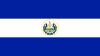
Most of El Salvador (’the savior’ in Spanish) is volcanic. The country has been racked by civil war and a succession of natural disasters which have left it physically devastated and psychologically traumatized.
In the 1920s, the military entered the political arena (by virtue of successfully putting down a farm workers’ revolt led by Augustin Farabundo Marti) and has retained a central role ever since. The economic problems grew throughout the 1950s, 60s and 70s. The 1980 assassination of Archbishop Romero (a leading critic of civil rights abuses) by right-wing elements, accelerated the country’s plunge into civil war.
As the war spread throughout the country during the 1980s, the government received huge amounts of US military and civil aid. A formal ceasefire, under UN auspices and supervised by a joint forum of the two sides, entitled the National Commission for the Consolidation of Peace (COPAZ), came into force at the beginning of 1992.
Political differences were temporarily set aside in January 2001, when the country was struck by a massive earthquake, which killed several thousand and left tens of thousands homeless. The reconstruction period was overshadowed once again by the legacy of the civil war. There were repeated clashes over compensation, between ex-fighters and security forces, while in 2002, several former generals in exile in the USA were convicted in US courts of human rights abuses.
Despite the scars left by civil war, poverty and natural disasters, visitors will appreciate the resilience and optimism such tragedy seems to have inspired in El Salvadorans. Poor communities such as Ilobasco and La Palma have become renowned for their handicrafts and folk art. Even though crime is still a problem for those visiting the country, the National Civilian Police (PNC), created in the wake of war, is working on improving safety.
The country’s major attractions include volcanoes, mountains (especially those in Cerro Verde National Park), beaches, tropical nature preserves and archaeological sites from the Maya civilization.
Geography
El Salvador is located in Central America and is bordered north and west by Guatemala, north and east by Honduras and south and west by the Pacific Ocean. Most of the country is volcanic uplands, along which run two almost parallel rows of volcanoes. The highest are Santa Ana at 2,365m (7,759ft), San Vicente at 2,182m (7,159ft) and San Salvador at 1,943m (6,375ft). Volcanic activity has resulted in a thick layer of ash and lava on the highlands, ideal for coffee planting. Lowlands lie to the north and south of the high backbone.